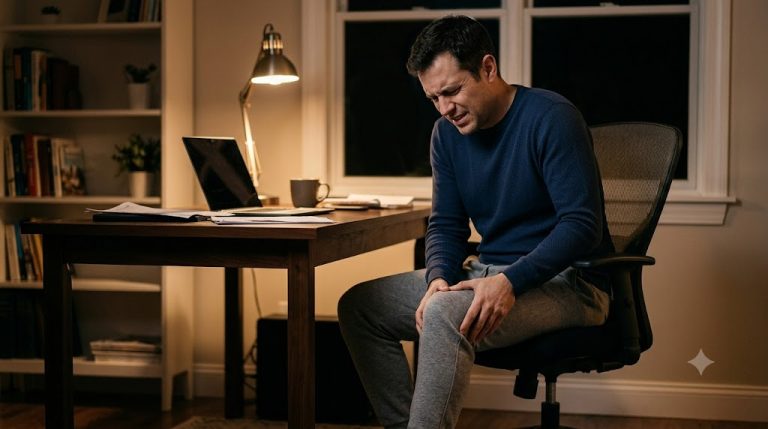
Why Your Knee Pain Feels Worse at Night
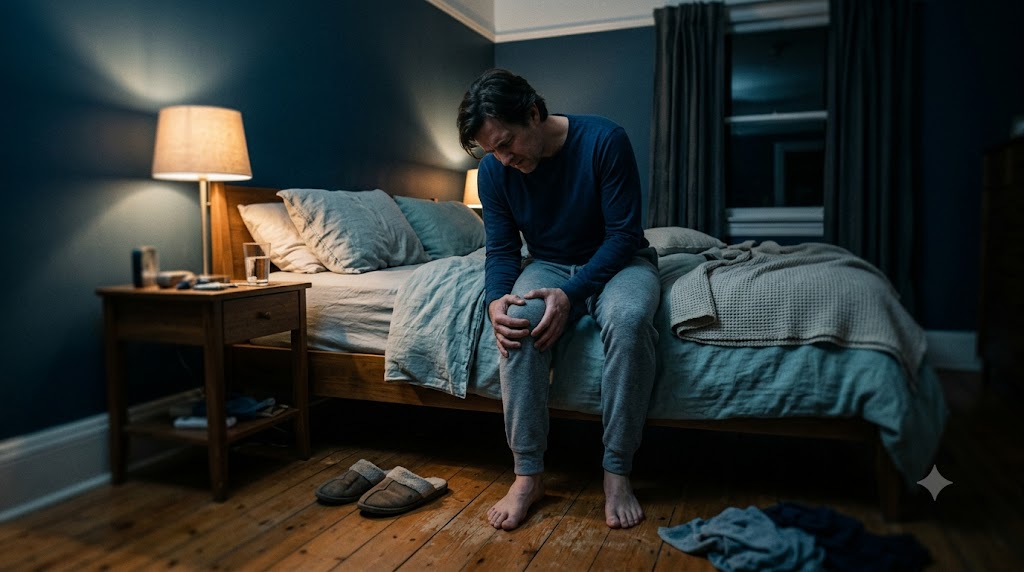
Knee pain can be frustrating during the day, but it can feel even more difficult when it keeps you awake at night. Many people with chronic knee pain notice that their discomfort becomes more noticeable when they lie down, relax, or try to sleep. If this happens often, it may be a sign that your knee needs attention.
Nighttime knee pain may be connected to knee osteoarthritis, inflammation, swelling, joint stiffness, or overuse during the day. Understanding why pain feels worse at night can help you know when to seek care and explore treatment options.
Why Knee Pain May Feel Stronger at Night
During the day, you may be distracted by work, errands, conversations, and daily responsibilities. At night, those distractions fade. When your body is still, pain signals can become more noticeable.
Your knee may also feel stiff after being in one position for a long time. If the joint is inflamed or irritated, lying still can make aching, throbbing, or tightness more noticeable.
Knee Osteoarthritis and Night Pain
Knee osteoarthritis is a common cause of chronic knee pain. It occurs when the cartilage inside the knee joint becomes worn or damaged over time. As the joint changes, patients may experience pain, stiffness, swelling, and reduced mobility.
For some people, osteoarthritis symptoms are worse after a long day of walking, standing, climbing stairs, or working. By bedtime, the knee may feel sore, swollen, or inflamed from the day’s activity.
Inflammation Can Affect Sleep
Inflammation plays a major role in many cases of knee pain. When the knee joint is irritated, fluid and inflammation can build up around the joint. This may cause aching, pressure, stiffness, or warmth.
At night, inflammation may make it harder to find a comfortable position. You may wake up when turning over, bending the knee, or trying to straighten the leg.
Daily Activity Can Lead to Nighttime Discomfort
If you spend the day on your feet, your knees may feel the effects later. Long periods of standing, walking on hard surfaces, using stairs, or doing yard work can place stress on the knee joint.
Patients with knee osteoarthritis may notice that even normal activities can lead to nighttime soreness. This does not mean you should avoid all movement, but it may mean your knee pain needs evaluation.
When Night Knee Pain Should Be Checked
Occasional soreness may happen after extra activity, but frequent nighttime knee pain should not be ignored. You should consider a consultation if:
- Knee pain wakes you up
- Pain makes it hard to fall asleep
- Your knee feels swollen or stiff at night
- Pain is worse after walking or standing
- You have trouble straightening or bending the knee
- Medication or rest is no longer enough
- Knee pain affects daily activities
These symptoms may be signs of knee osteoarthritis or another condition that needs care.
Why Sleep Matters for Pain
Poor sleep can make pain harder to manage. When you do not sleep well, your body may feel more sensitive the next day. Fatigue can also make it harder to stay active, exercise, or complete daily tasks.
This can create a cycle where knee pain affects sleep, poor sleep affects energy, and reduced activity makes knee stiffness or weakness worse.
Explore Nonsurgical Knee Pain Treatment
At Knee Pain Centers of America, patients can learn about nonsurgical treatment options for knee osteoarthritis. The goal is to help patients reduce discomfort, improve mobility, and return to daily life with more confidence.
If knee pain is keeping you up at night, you do not have to keep pushing through it. A consultation can help you understand what may be causing your symptoms and whether nonsurgical treatment may be right for you.