Why Knee Pain May Feel Worse Going Down Stairs
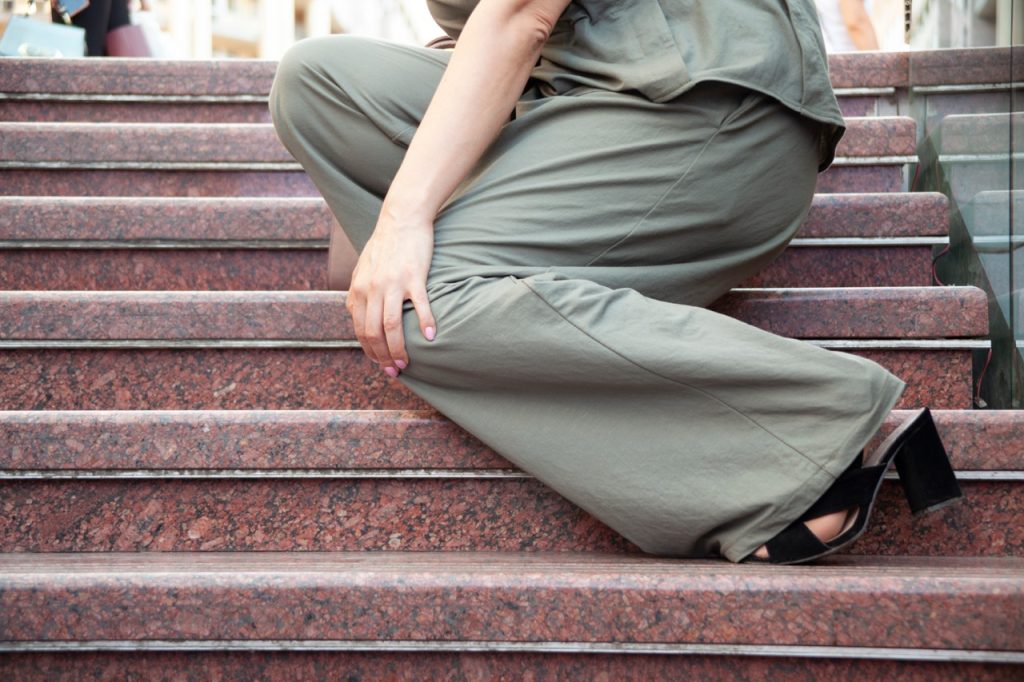
Many people with knee pain notice that going down stairs feels worse than going up. You may feel sharp pain, pressure, weakness, or hesitation with each step. Some people begin holding the railing, turning sideways, or taking one step at a time.
Pain going down stairs can be a sign that the knee joint is struggling with pressure, control, or inflammation. For many patients, knee osteoarthritis may be a contributing factor.
Why Going Down Stairs Is Hard on the Knees
Going downstairs requires the knee to control your body weight as you lower yourself with each step. This creates force through the joint and demands support from the muscles around the knee.
If the knee is painful, stiff, swollen, or weak, that lowering motion can feel uncomfortable or unstable.
Knee Osteoarthritis and Stair Pain
Knee osteoarthritis occurs when the protective cartilage inside the knee joint becomes worn or damaged. Cartilage helps cushion the bones and allows the knee to move smoothly. When cartilage changes, the joint may become more sensitive to pressure.
Stairs can make osteoarthritis symptoms more noticeable because the knee bends and carries increased load. Going down may feel worse because the joint has to absorb and control more force.
Symptoms Patients May Notice
Stair-related knee pain may include:
- Pain in the front of the knee
- Pain along the inside of the knee
- A grinding or clicking feeling
- Swelling after stairs
- Weakness or instability
- Trouble bending the knee
- Fear of the knee giving out
- Needing the railing for support
If these symptoms are happening often, it may be time to seek care.
Why Muscle Support Matters
The quadriceps and other leg muscles help stabilize the knee. If knee pain causes you to move less, these muscles can weaken. Weakness can make going downstairs more difficult because the knee has less support during the lowering motion.
This can create a cycle where stair pain leads to avoiding stairs, avoiding stairs leads to weakness, and weakness makes stairs feel even harder.
Should You Avoid Stairs Completely?
Avoiding stairs may help reduce pain temporarily, but it may not address the underlying cause. If stairs are becoming difficult, a knee pain consultation can help identify what is causing the problem and what treatment options may be available.
The goal is not simply to avoid movement. The goal is to understand your knee pain and support better mobility.
When to Get Evaluated
You should consider a consultation if:
- Going downstairs causes frequent pain
- You rely heavily on the railing
- Your knee feels unstable
- Pain is getting worse
- Your knee swells after stairs
- You avoid places with stairs
- You feel less confident walking
- Medication or rest is not enough
These signs may suggest knee osteoarthritis, inflammation, or another joint issue.
Nonsurgical Options for Knee Pain
At Knee Pain Centers of America, patients can learn about nonsurgical treatment options for knee osteoarthritis. These options may help certain patients reduce discomfort, improve mobility, and feel more confident during daily activities.
If going down stairs has become painful, schedule a consultation to learn more about your options.